Search
Masculinity in Motion: An Alternative History of German-Jewish Emigration to Palestine
September 2026
Publications
Publication date:
2026
2026
Patrick Farges
Neofelis Verlag (éd.)
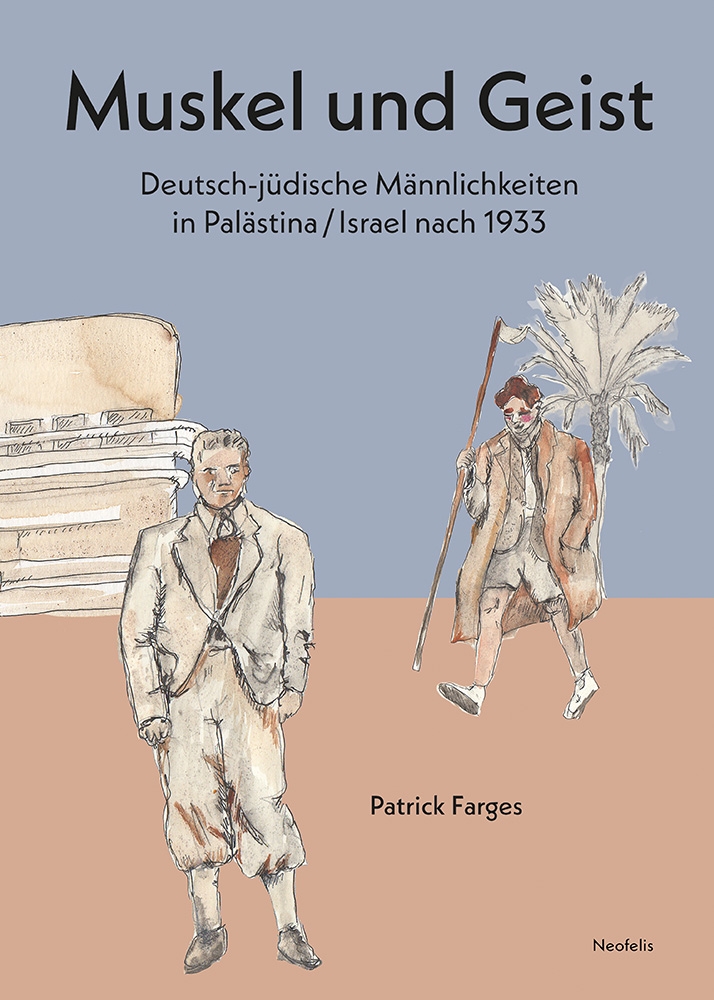
The intensifying Nazi persecution in Germany and Central Europe forced tens of thousands of German-speaking Jews to emigrate in the 1930s. Faced with international admission barriers during the Great Depression, many sought refuge in the British Mandate of Palestine. Patrick Farges examines this German-speaking Jewish migration to Palestine through the lens of masculinity. Drawing on ego-documents—oral history interviews, autobiographies, and letters—he offers new insights into Jewish cultural history.Here, the history of masculinity is understood as a relational and intersectional history, one that accounts for power dynamics between men and women, as well as among men, and considers social and racialized inequalities. Gender-specific differences shaped the socialization, migration, integration, memory, and everyday experiences of those who emigrated to Palestine in the 1930s and later integrated into the newly founded State of Israel after 1948. For those affected, the Aliyah to Eretz Israel represented a profound rupture, transforming social bonds, cultural identity, and gender roles. At this juncture, competing conceptions of how one ought to behave “as a man” came to the fore.In the near-constant state of war since the 1930s, meeting the Zionist ideals of “Muscle Jewry,” (male) regeneration, and Jewish-national militancy posed a particular challenge. However, the Central European bourgeois masculinity of the new immigrants barely aligned with the expectations of the pioneer (Chalutz), the “New Jew,” or the kibbutznik. Some among the “Yekkes” also recognized parallels between Israeli masculinist nationalism and the very nationalism that had driven them out of Europe. This tension between muscle and intellect thus emerged.